
Project Photos
A selection of recent jobs from our San Diego County service area.
Almost every door below started as a problem rather than a wish list. A section buckled after a bumper tap. A 25-gauge builder door from 1998 finally rusted through at the bottom rail. A homeowner in a coastal neighborhood got tired of repainting hardware that bloomed orange every winter. The finished photos are the pleasant part; the work that matters happened at the jamb, the track, and the torsion tube.
What you can read off these images with a little practice: the shadow line across a panel face tells you whether it is single-skin steel or a three-layer sandwich, the reveal between sections tells you whether the installer shimmed the vertical track plumb, and the hardware finish tells you whether anyone accounted for salt air. We shoot these after the balance test, with the door cycled six times and the weatherseal trimmed to the slab, which is the only point at which a job is actually done.
Materials across this set run from 24-gauge three-layer polyurethane steel at R-16, to composite-overlay carriage doors, to anodized aluminum full-view frames with frosted tempered glass. Every one is a residential garage door installation completed by our own crews between Carlsbad and Chula Vista — no subcontractors, no stock photography.
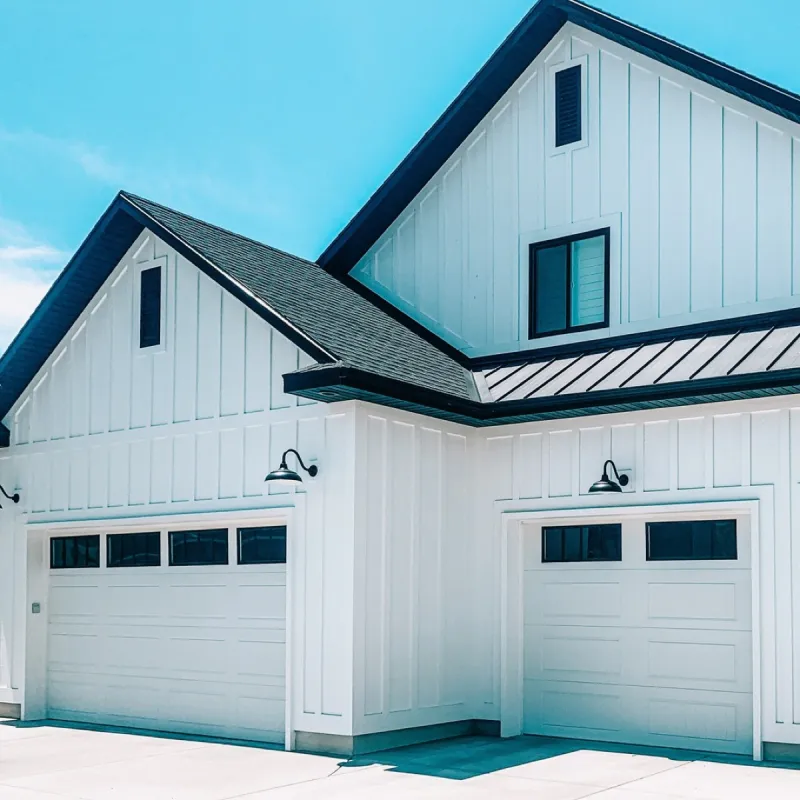
Notes From These Jobs
A little context on what each of these doors had to solve.
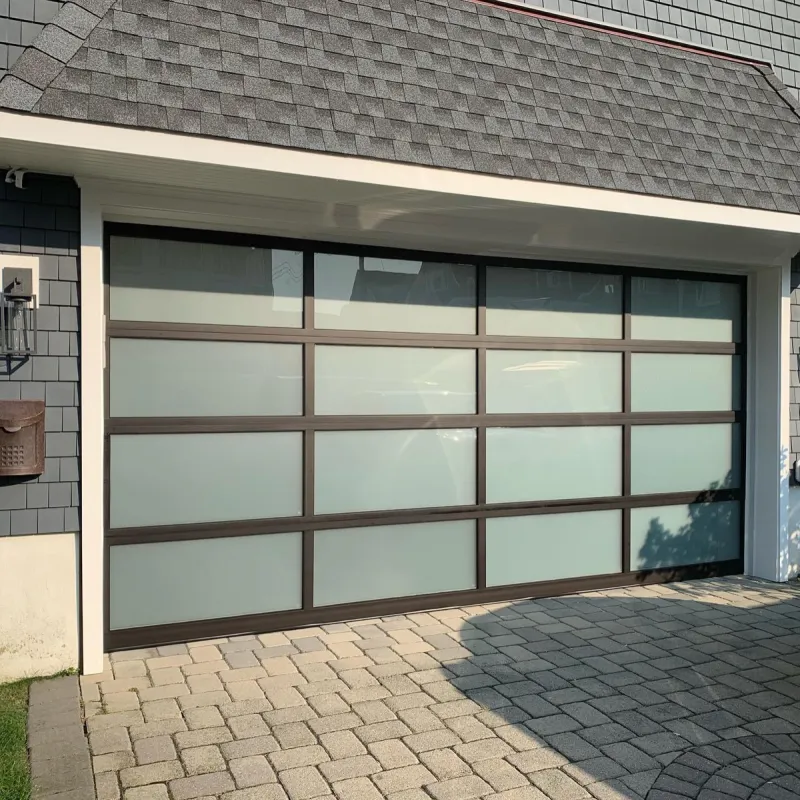
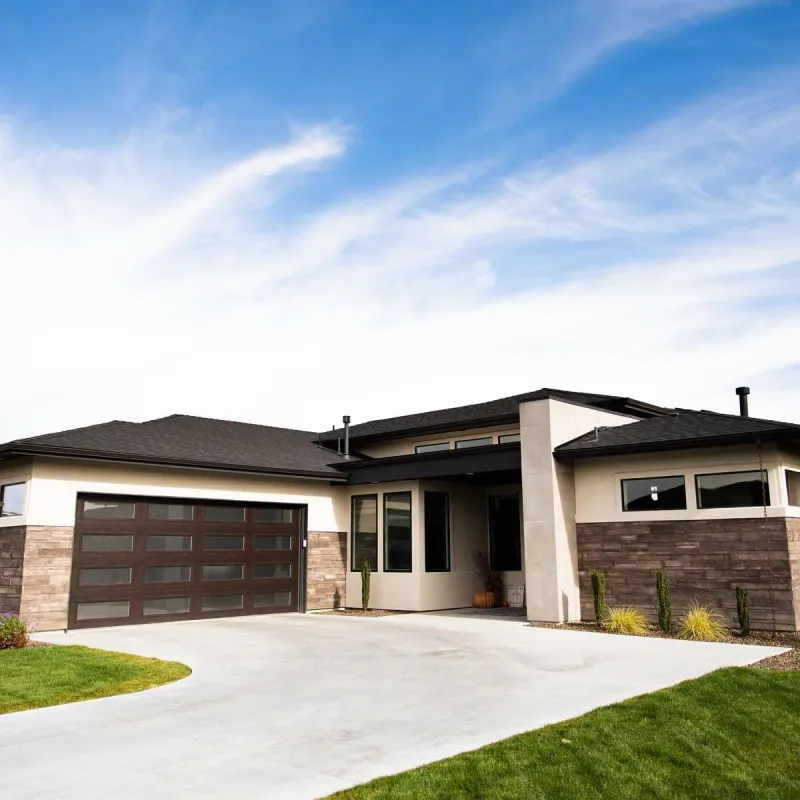
Anodized full-view door, La Jolla
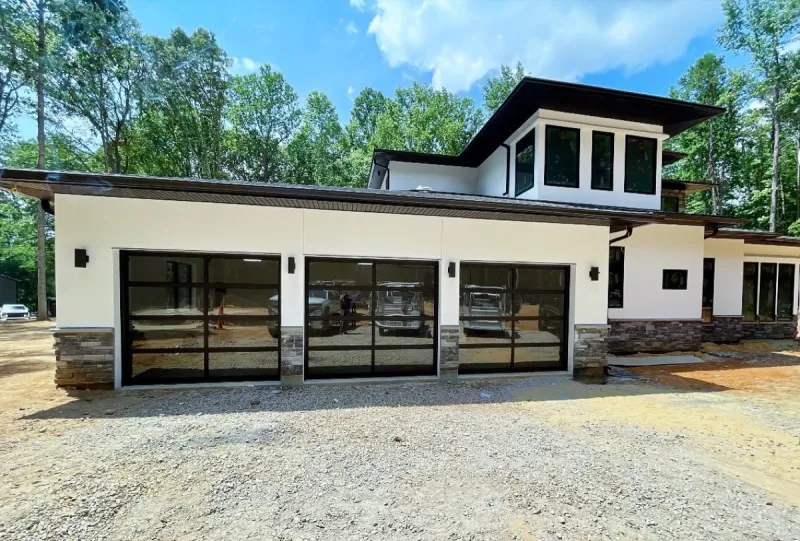
The original wood door had swollen and delaminated after a decade of marine layer. Aluminum stiles with a clear anodized finish and frosted tempered glass replaced it. Anodizing rather than paint was the whole point here — a painted frame this close to the water starts lifting at the corners within three or four years.
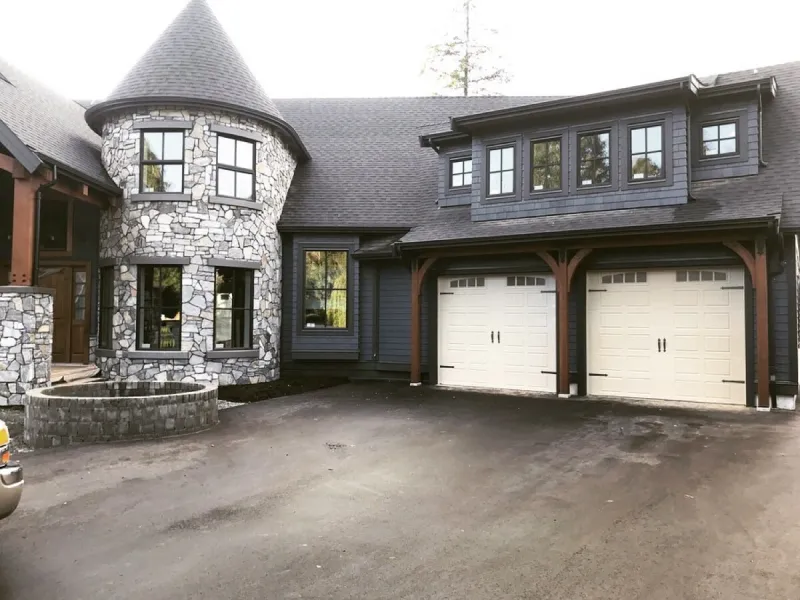
Composite carriage overlay, Mission Hills
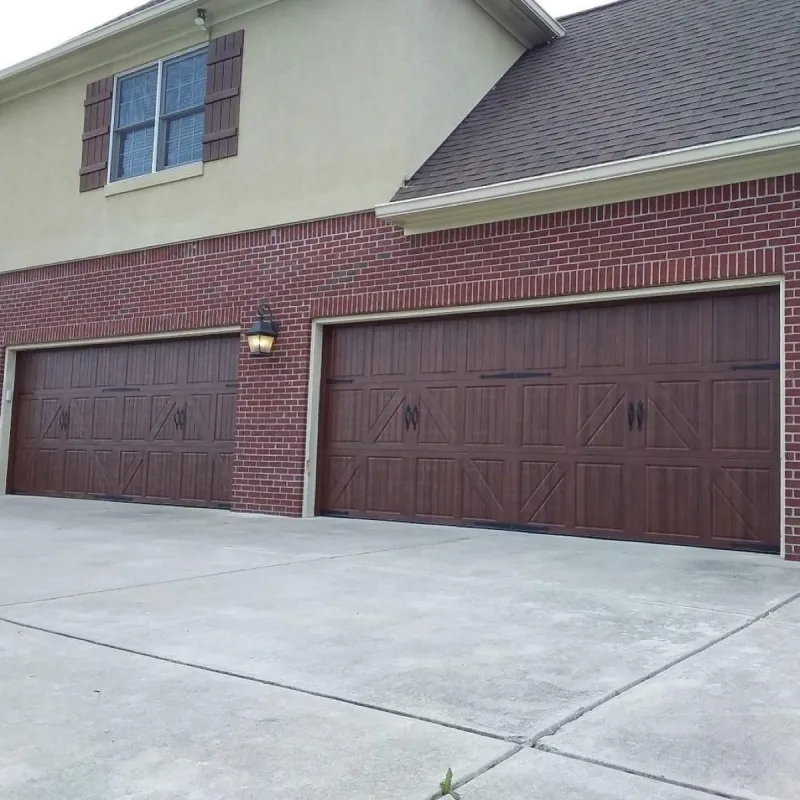
A 1920s craftsman with a low header. The carriage look came from a composite overlay on an insulated steel base rather than solid wood, which cut about 90 lb off the finished door and let the existing torsion tube stay in place. Decorative strap hinges and handles are surface hardware; the door still rolls up on standard track.
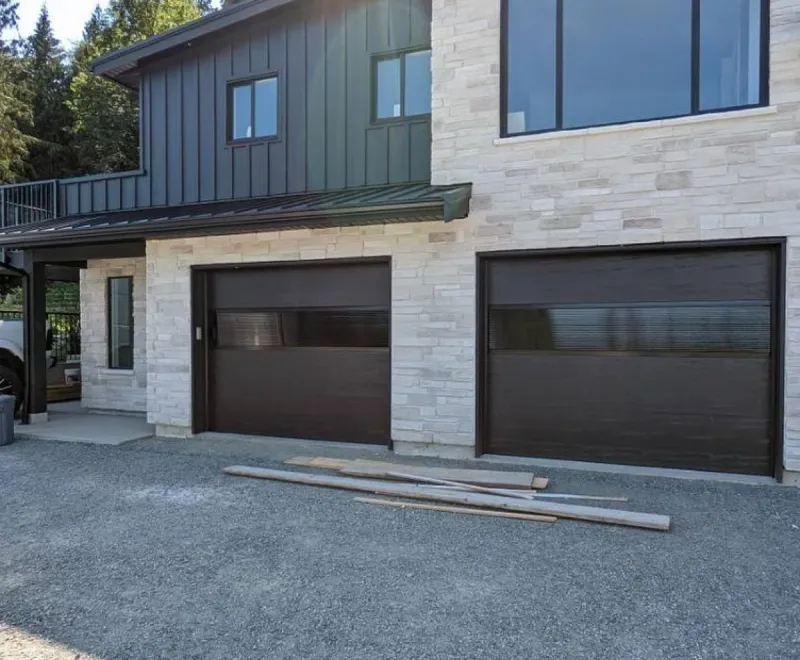
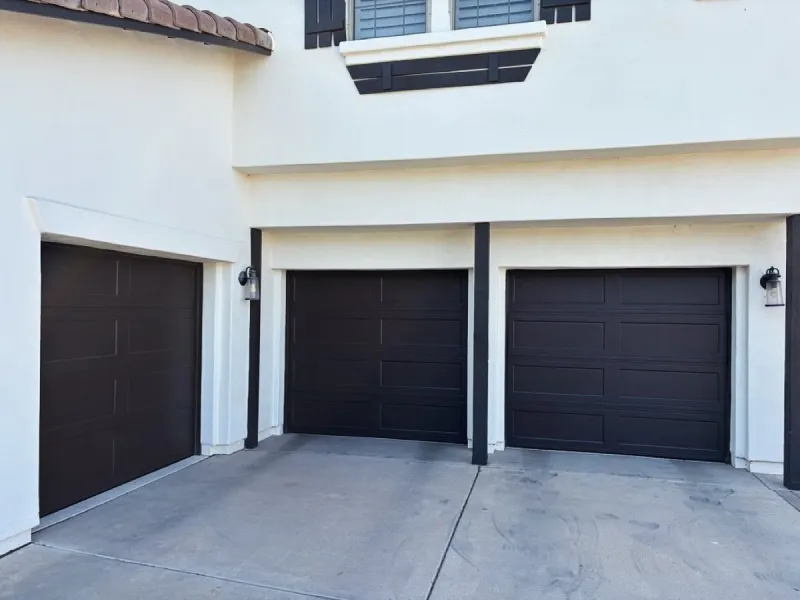
Charcoal flush panels, Chula Vista
Three-layer polyurethane construction at roughly R-16 on a south-facing elevation that used to bake. Dark finishes absorb heat, so the insulated core was not a luxury item here — it is what keeps the door from radiating into a garage the family uses as a workshop.
Three-bay carriage doors, Rancho Bernardo
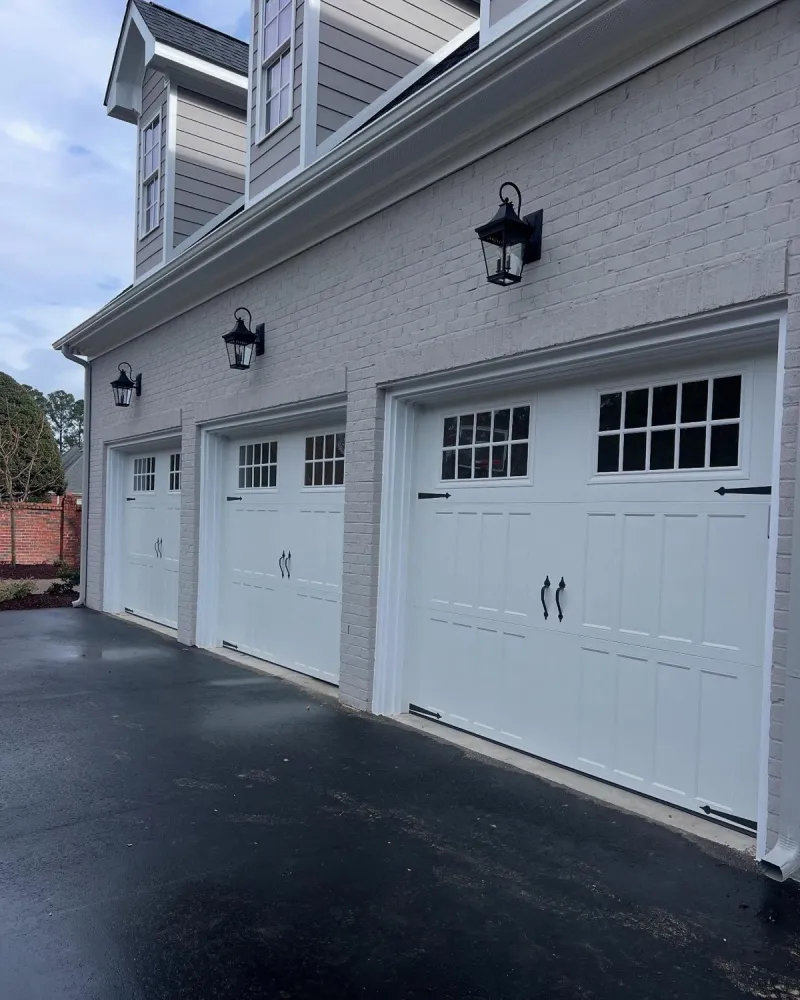
Three separate 9x7 openings finished on the same day. Matching three doors means matching three sets of springs to three slightly different weights — the center bay carried extra window glass and needed a heavier wire gauge than its neighbors. Same-looking doors are rarely the same door.
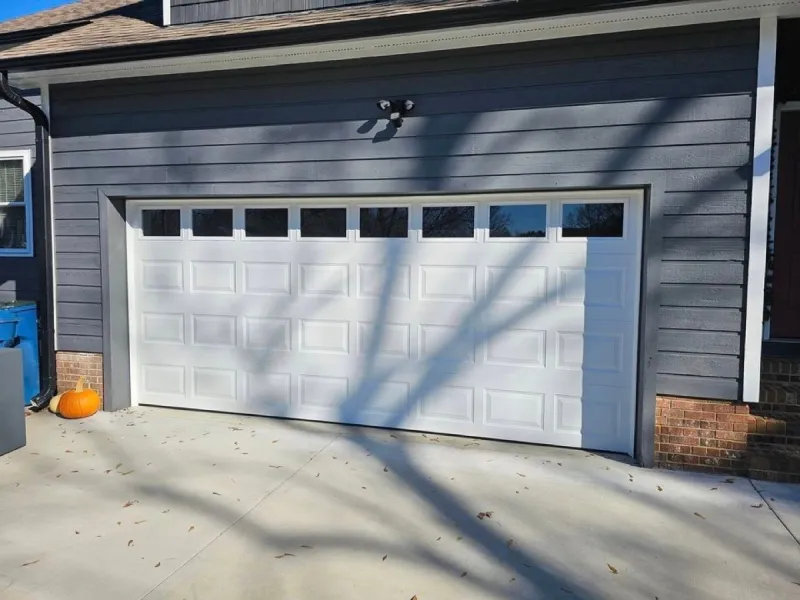
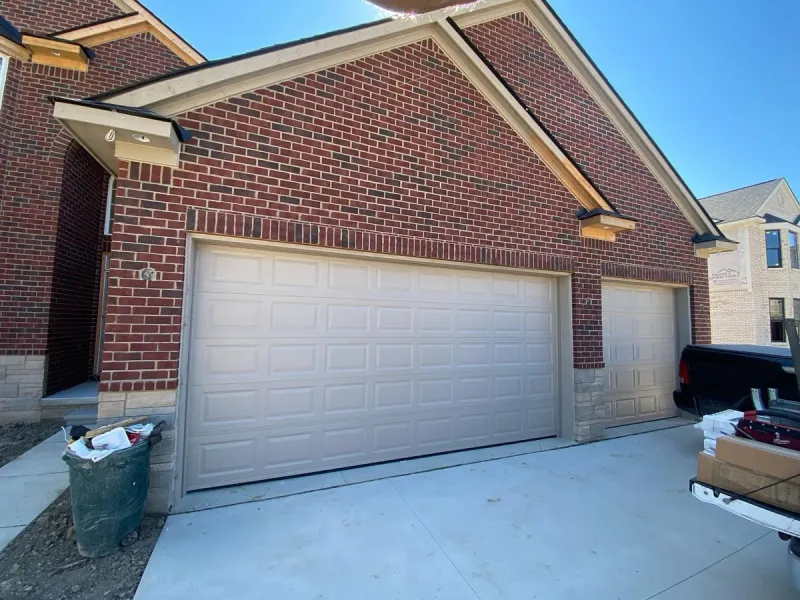
Insulated raised panel, Clairemont
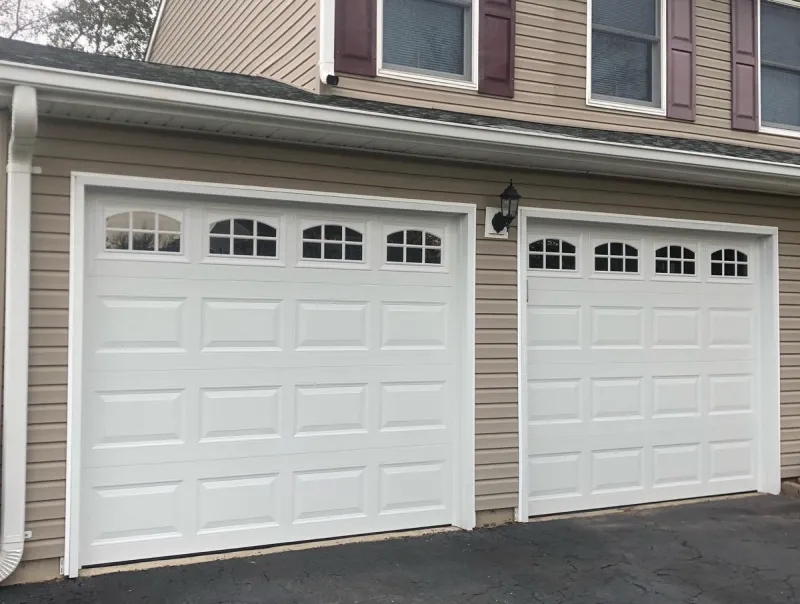
A bread-and-butter replacement of a rusted single-skin door from the early nineties. The bottom rail had corroded through where the old seal trapped water. New jamb boards went in before the track, which is the step that decides whether a door like this lasts five years or twenty.
Vertical glass accents, Point Loma
Hot-dip galvanized track brackets, stainless fasteners, and powder-coated springs throughout. Half a mile from the bay, standard zinc-plated hardware is orange inside two winters, and the spring is always the first thing to pit. Corrosion spec adds a modest amount to the invoice and roughly doubles the hardware life.
Not every job needs a new door. A surprising share of what we photograph is a single replaced section, a re-tracked door, or a rebalanced spring system on a door the owner assumed was finished — see panel repair, spring replacement, and general door repair. If you want a photo of work in your own neighborhood, ask when you call (619) 808-6343; we can usually send recent examples from your zip code.
Ready to Upgrade Your Garage Door?
Get a free, no-obligation estimate. We serve all of San Diego County.